What is CT2G?
The Center for Transdisciplinary ELSI Research in Translational Genomics (CT2G) brings together the unique resources of Kaiser Permanente Northern California (KPNC), including its Division of Research (DOR), and the University of California, San Francisco (UCSF), including the UCSF/Hastings College of the Law Consortium on Law, Science & Health Policy. CT2G serves as a novel resource for ethical, legal, social and policy analysis of emerging issues in translational genomics.
News:
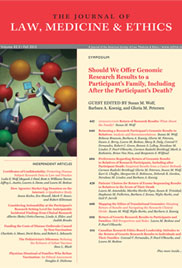
CT2G Co-Director, Dr. Barbara Koenig, guest edited the Journal of Law, Medicine & Ethics Special Issue “Should We Offer Genomic Research Results to a Participant’s Family, Including After the Participant’s Death?” Articles include:
Introduction
- Introduction: Return of Research Results: What About the Family?
Symposium Articles
- Returning a Research Participant’s Genomic Results to Relatives: Analysis and Recommendations.
- Preferences Regarding Return of Genomic Results to Relatives of Research Participants, Including after Participant Death: Empirical Results from a Cancer Biobank.
- Patients’ Choices for Return of Exome Sequencing Results to Relatives in the Event of Their Death.
- Mapping the Ethics of Translational Genomics: Situating Return of Results and Navigating the Research-Clinical Divide.
- Return of Genetic Research Results to Participants and Families: IRB Perspectives and Roles.
- Canadian Research Ethics Board Leadership Attitudes to the Return of Genetic Research Results to Individuals and Their Families.
- Returning a Research Participant’s Genomic Results to Relatives: Perspectives from Managers of Two Distinct Research Biobanks.
- Pediatric Cancer Genetics Research and an Evolving Preventive Ethics Approach for Return of Results after Death of the Subject.
- How Much Control Do Children and Adolescents Have over Genomic Testing, Parental Access to Their Results, and Parental Communication of Those Results to Others?
- A Family-Centered Model for Sharing Genetic Risk.
- Disclosing Secondary Findings from Pediatric Sequencing to Families: Considering the “Benefit to Families”.
- Return of Results from Research Using Newborn Screening Dried Blood Samples.
- Considerations for Returning Research Results to Culturally Diverse Participants and Families of Decedents.
- International Policies on Sharing Genomic Research Results with Relatives: Approaches to Balancing Privacy with Access.